Paper menus
Good for atmosphere, expensive and slow when content changes.
A new category for premium hospitality menus
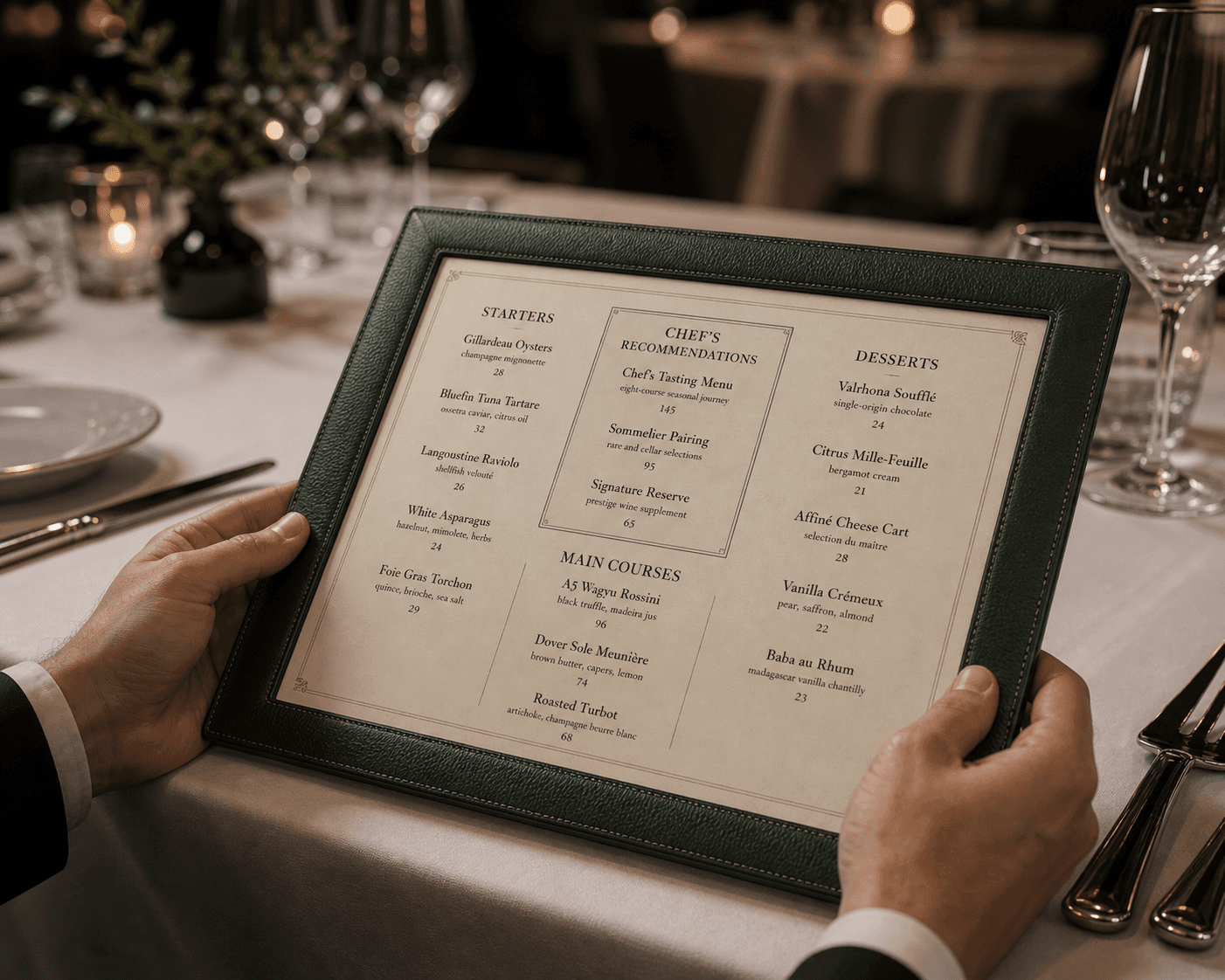
TailorTaste is a leather bound menu object for restaurants and hotels. Staff control language, service state, and content while guests simply read a premium menu.
Loading 3D experience…
The missing middle
The problem is practical: menus change by service, language, event, availability, and lighting conditions. TailorTaste keeps the guest-facing object physical while giving staff controlled ways to update what it shows.
Paper menus
Good for atmosphere, expensive and slow when content changes.
TailorTaste
A physical object controlled by staff, updated through software, read like a menu.
QR & tablets
Easy to update, but they move attention away from the room and into a device.
Why now
Premium teams now manage more translations, dietary questions, event formats, service states, and last minute changes. The menu has become operational infrastructure, even if it still looks like paper.
01
Operators need faster changes without adding visible restaurant tech to the table.
02
Hotels and destination restaurants often serve the same table in different languages.
03
QR codes and tablets optimize access, not presentation, handout, or staff control.
04
Low power displays make a calm, readable, menu shaped object technically realistic.
Physical object. Software underneath.
The object
The menu is read only for guests. Staff handle language, menu state, and content before or during service, so the product supports the room instead of becoming a guest interface.
What becomes possible
The product should first reduce manual menu work, not add new guest behavior.
Use one object for multiple guest languages instead of maintaining separate printed sets.
Prepare lunch, dinner, event, or tasting menu states from the staff side.
Tune readability for darker rooms without turning the menu into a bright screen.
Keep menu changes in staff hands instead of asking guests to tap through options.
Later versions can help staff surface suitable dishes without narrowing the full menu for everyone.
Operational value
Reduce reprints, version mismatches, and last minute menu substitutions.
Receive the correct menu in a format that still feels like part of the restaurant.
Treat the menu as an object staff can manage, not a static file sent to print.
Service fit
Staff choose the relevant state, hand out the object, and make controlled updates when service needs them.
01
02
03
Menu changes
Whatever a venue needs to adjust, TailorTaste should make it a controlled staff-side update. The pilot helps decide which changes matter first.
01
Switch language versions for international tables without maintaining separate printed sets.
02
Move between lunch, dinner, tasting, event, or room-service menus from the staff side.
03
Update dish text, specials, sold-out items, and dietary notes without another print cycle.
04
Support controlled price or availability changes later, once the pilot proves the workflow.
Founder note
Because the menu is where guest experience and daily operations meet. Every guest sees it, staff handle it constantly, and small mistakes in language, availability, allergens, or price create real service friction.
Pilot conversations
Reach out with the service setting, menu workflow, or pilot constraint you would want TailorTaste to solve.